Cold Chain Guides
How to Load a Refrigerated Truck So Airflow Reaches the Cargo
A unit only cools the air it can move. Blocked return air, freight against the bulkhead and covered floor channels cause failures that look like equipment faults.
How to Load a Refrigerated Truck So Airflow Reaches the Cargo
A transport refrigeration unit does not cool cargo. It cools air, and the air cools the cargo. Every link in that chain depends on movement, which means the single most consequential decision a loader makes is not how much freight goes in the body but where the air can go once the doors are shut.
This is why so many temperature complaints are resolved without touching the equipment. A unit that appears unable to hold setpoint is often a unit whose return-air path has been blocked by a pallet, whose floor channel is covered by a collapsed carton, or whose evaporator outlet is buried behind a stack loaded to the ceiling.
The Air Path Has Two Halves
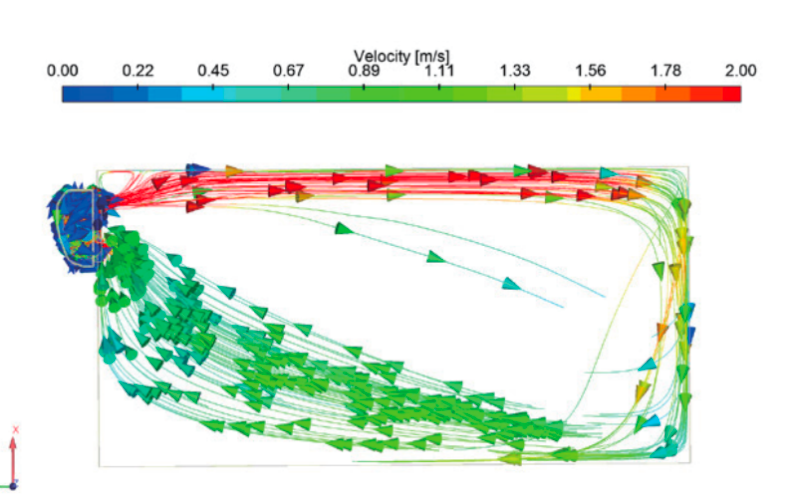
Refrigerated air leaves the evaporator, travels along the ceiling or through an air chute toward the rear of the body, gives up its cooling to the cargo as it moves, and then returns along the floor to the evaporator to be cooled again. Supply and return are both necessary. Block either one and the loop stops working, regardless of how much capacity the unit has.
The supply side is the more obvious one. The return side is the one that gets blocked in practice, because the return path runs along the floor, under and behind the freight, where nothing is visible from the door once the body is loaded.
The 10 cm Rule and the Bulkhead
The operating instructions for these units give a specific clearance: cargo must be kept at least 10 cm from both faces of the bulkhead, and pallets may be used as spacers to achieve it.
That clearance exists because the bulkhead is not simply a partition. It is the boundary across which return air travels back to the evaporator, and freight pressed against it effectively seals the return path. Once that happens the evaporator is starved of air, the compressor runs continuously without moving heat out of the box, and the temperature drifts upward while the panel shows the unit working hard.
The practical consequence in loading terms is that the bulkhead is a boundary to be respected, not a wall to lean freight against. Freight pressed to it on the evaporator side closes the return path; a bulkhead that has moved away from the ceiling or wall leaves a gap that lets warm air short-circuit the whole refrigeration loop. Both failure modes produce the same result: the unit runs, the box drifts.
Floor Channels and T-Floor
The floor of a refrigerated body is part of the air system, not just a surface to stand on. Floor channels and T-floor sections form the return path, and they only work while they are open.
Two loading practices close them. The first is loading pallets directly onto the floor without regard to channel direction, so that the pallet base spans and covers the channels. The second is allowing freight to settle or collapse under its own weight during the journey, which is common with soft cartons and bags loaded to the ceiling.
Neither blockage is visible from the cargo door once the body is loaded, which is why the check has to happen during loading rather than after it. A loader who knows the floor is part of the air path will orient pallets along the channels and leave the rear floor clear. A loader who does not will produce a body that looks correctly filled and cannot hold temperature at the back.
Loading Patterns That Fail
Most failures fall into a small number of recognisable patterns.
Pattern | What it blocks | What the driver sees |
|---|---|---|
Freight stacked to the ceiling at the rear | Supply air reaching the rear cargo | Rear cargo out of temperature, front cargo correct |
Pallets tight against the bulkhead | Return air to the evaporator | Whole box drifts upward; unit runs continuously |
Floor channels spanned by pallet bases | Return path along the floor | Slow recovery after every door opening |
Load shifted during transit | Initially clear path, then blocked | Temperature fine at departure, out of range mid-route |
Cartons collapsed under load | Floor channels and low-level return | Progressive drift on longer runs |
The shift case deserves attention because it produces the most confusing symptom. A body loaded correctly at the dock can arrive with its air path closed, simply because freight moved during braking or on poor road surfaces. That is why the in-transit check is a return-air temperature reading rather than a visual inspection — the reading captures the consequence of a shift that nobody could see.
Supervising the Load
The instruction is to supervise loading, and to confirm that there is enough air space around and between the cargo that circulation is not obstructed. Supervision is not a formality. A loader working to a deadline will fill the body to the ceiling because the load fits, and the fact that it fits is unrelated to whether the unit can cool it.
Two loading rules cover most situations. Keep a clear path from the evaporator outlet to the rear of the body, which usually means leaving the top of the load below ceiling height at least along the supply route. And keep the bottom clear, which means stacking on pallets that do not span the floor channels rather than loading directly onto the floor.
Checks Before the Doors Close
The operating procedure lists a short set of post-loading checks, and each one is aimed at a specific failure mode.
Three of those checks bear directly on airflow. Confirm the evaporator outlet is not blocked by freight. Confirm the load has not shifted against the rear doors or the bulkhead during closing. And confirm that nothing has been stacked into the space above the load along the ceiling run, because that is the supply path the unit depends on.
If the air cannot get back to the evaporator, the unit's capacity figure is irrelevant. The box will drift no matter how large the compressor is.
Why This Matters More Than Unit Selection
Buyers spend a great deal of time comparing cooling capacity between units, and very little time comparing how their own loading practice interacts with the body they are buying. That is backwards, because a correctly selected unit loaded badly will underperform a modestly selected unit loaded well.
The loading checks here assume the unit was correctly specified for the body in the first place. The HD-380 product page covers body volume, mounting configuration and rated performance for the direct-drive range.
For bodies running two temperature zones, loading discipline becomes more demanding rather than less; why a multi-temperature unit beats two trucks explains the configuration side.
The practical implication for a fleet is that loading discipline is a refrigeration control, not a warehouse procedure. It belongs in the same conversation as unit selection, because the two only work together.